
Directional Drilling Under a Finished Driveway in Aurora
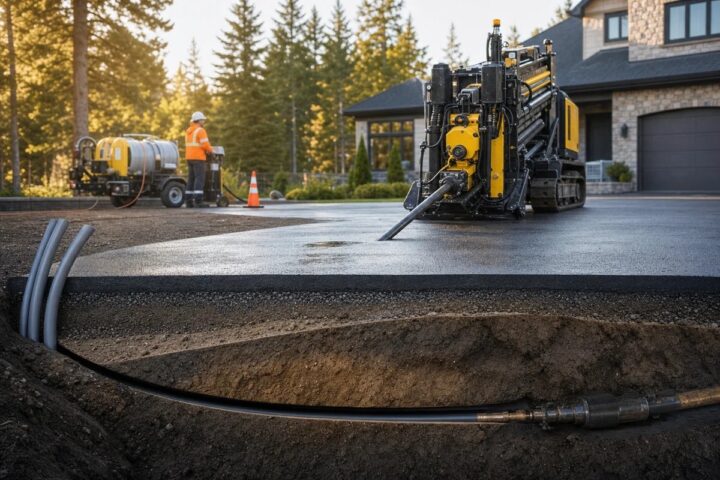
What this Aurora driveway project needed to solve
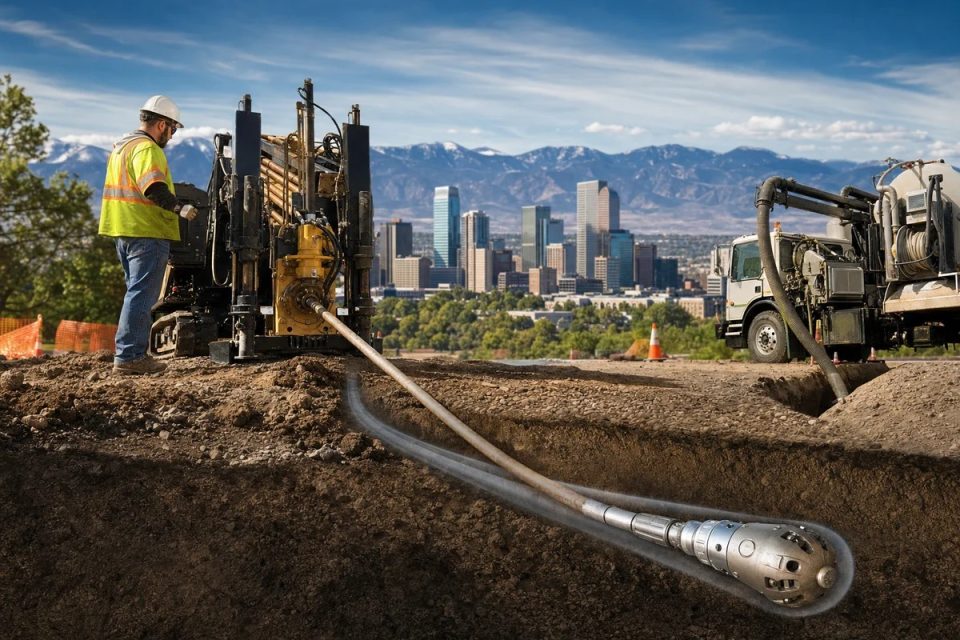
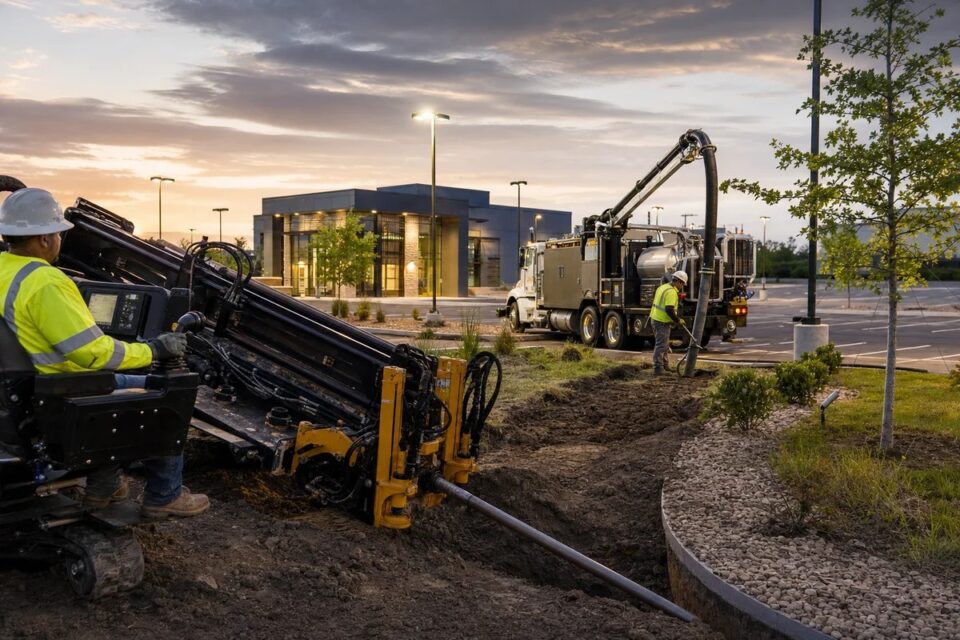
A conduit had to cross a finished driveway in Aurora without tearing out the slab or shutting down access. That is the kind of crossing where the horizontal directional drilling process makes the most sense, because we can create a narrow underground path instead of sawcutting a trench across the concrete.
That trenchless approach keeps the driveway surface, edging, and nearby landscaping intact. It also lets us preserve access for vehicles while the work is underway, which matters on residential drives, shared aprons, and active commercial entrances.
The goals were straightforward, but they had to be met in the right order: preserve the driveway surface, keep the route on grade, and finish with only small entry and exit pits. When the route is planned correctly, underground conduit installation beneath driveway surfaces becomes a clean utility solution instead of a restoration project.
For homeowners and property managers, that difference is the whole point. You get the utility path you need without turning a finished driveway into an open-cut repair zone.
The 4-step layout that made the bore possible
The first step was utility locates, and we treated that as non-negotiable. We confirmed every known line we could identify, including gas, water, electric, telecom, irrigation, and any private service runs, because a safe bore starts with clear marks and a conservative plan. When a mark needs confirmation, hydro excavation is often the safest way to pothole around an existing line.
Next, we measured driveway width, slab depth, and the safe clearance window under the concrete before choosing bore depth. On most residential crossings, that planning step sets the whole job, because once the pilot path is established, the final route should stay below the slab with enough cover to avoid heave and surface stress.
Then we placed entry and exit pits outside wheel paths and drainage channels. That keeps the drill from disturbing the slab edges and helps a trenchless conduit under driveway layout stay stable from start to finish.
Finally, we checked soil type and moisture. Compacted clay can hold a line well but resist spoil movement, fill can steer differently than native ground, and saturated soil can loosen the bore wall, so those conditions change how we drill and how we handle returns.
How we chose the entry and exit pits
We kept each pit outside the slab footprint and outside the most visible landscape areas so the finished driveway stayed visually clean. We also left enough straight shot for the drill head to hold line without overcorrecting, which is especially important on a directional boring for an existing driveway project where the first few feet set the tone for the whole bore.
Low spots were avoided because water and slurry collect there fast, and that creates cleanup and compaction problems later. A shallow, well-drained pit location is easier to restore and far less likely to leave a soft spot after backfill.
Drilling the conduit beneath the finished driveway
The sequence was pilot bore first, then ream the path, then pull in the conduit or casing. For a short residential crossing, the pilot bore usually takes 30 to 60 minutes, the ream and pullback usually take 45 to 90 minutes, and both phases can run longer if the soil packs tight or we need a depth correction.
During the pilot shot, we tracked depth in real time and checked the head position against the locate marks. That is the control layer that keeps horizontal directional drilling under a concrete driveway safe, because we are not guessing where the tooling is, we are verifying it as the bore advances.
We also watched the returns closely. A sudden change in fluid flow can signal a void, a tight spot, or an unexpected obstruction, and catching that early is what keeps a small problem from becoming a concrete repair problem.
Once the pilot path was verified, reaming opened the route enough for the conduit to pull cleanly. The pullback is the visible finish, but the true work is what happens before it, when the path is still small enough to correct.
Why the pilot bore matters more than the pullback
A small steering error in the pilot shot becomes a bigger problem during reaming because the hole is larger and less forgiving. The pilot path also sets the final depth, so corrections are easier before the bore is enlarged. We only pull back once the path has been verified end to end.
How we protected the concrete, edging, and access
The biggest protection came from the footprint itself, only two small pits instead of a long trench, and no sawcut across the finished slab. That is why directional drilling under finished driveways in Aurora is often chosen for homes and businesses that cannot afford heavy restoration afterward.
From there, the cleanup had to be just as disciplined. We contained slurry, protected joints and edging, and backfilled in layers so the pits would settle correctly rather than slump a week later.
The final quality check was simple but important: inspect for heave, hairline cracking, ponding, or disturbed irrigation before wrapping up. Access can be restored as soon as the backfill is compact and the surface is safe for traffic, which is one of the main advantages of boring under a finished driveway instead of opening the slab.
That same process also helps protect nearby hardscape. Patios, walkways, and stamped borders can stay in place when the drill path is planned with enough clearance and the pits stay outside the finished surface.
When directional boring is the better call
Directional drilling vs trenching usually comes down to one thing: how much surface disruption the site can tolerate. Directional boring is the better call when the surface above the route matters more than a wide-open excavation. Finished concrete, stamped drives, patios, and active commercial access points are all good examples, because the restoration scope stays smaller and the disruption stays more controlled.
| Criteria | Directional boring | Open-cut trenching |
|---|---|---|
| Surface impact | Two small pits, driveway slab stays intact | Long trench across the surface, slab or pavement is removed |
| Restoration scope | Backfill, compact, and small patch work at pits | Concrete, base, and finish replacement over the trench line |
| Traffic disruption | Short-term, limited to pit areas and setup space | Broad closure while excavation and repair are completed |
| Best-use cases | Driveways, patios, active aprons, landscaped crossings | Exposed line repairs, shallow runs with no drill path, unavoidably blocked routes |
Open-cut still makes sense when a failed line must be exposed, a shallow crossing leaves no room for a drill path, or an obstruction cannot be bypassed safely. If the route cannot maintain safe clearance, the method has to change, because forcing a bore through the wrong conditions creates more damage than it saves.
Planning a bore under your driveway in Aurora?
Before choosing a method, look at the route, the slab, and the nearby utilities together. Clearance, access for equipment, and how much surface restoration you want to avoid are usually the main decision factors, and they often point toward a trenchless solution when the driveway is already finished.
If you are comparing options for a residential drive, a commercial apron, or a patio crossing, our team can walk the site and map the safest path first. UES Construction offers free estimates and free consultation and inspection, so you can understand the scope before any work begins.
For Aurora-area property owners who need a trenchless crossing under a driveway, we are ready to help plan it correctly and keep the surface intact.
How deep does directional drilling under a finished driveway usually go?
Most crossings run about 24 to 60 inches deep, which is enough to clear the slab and keep working room above nearby utilities. We go deeper when crossing water, sewer, or other protected lines that need extra separation.
What would force the project to change from boring to open-cut trenching?
The project changes to open-cut when we cannot verify a utility, hit a hard obstruction, or must repair an existing damaged line. If safe clearance cannot be maintained, the path has to be changed before any further drilling.
Can you drill under a concrete driveway without cracking the slab?
Yes, a concrete driveway can usually stay intact when the bore stays deep enough and the drilling fluid is controlled correctly. The biggest crack risks are shallow depth, overpressurized fluid, and poor compaction at the pits, which is why keeping entry and exit pits outside the slab reduces stress.
How much surface repair is usually needed after trenchless conduit work?
Most residential crossings need only backfill and compaction at the pits. If the slab itself stayed intact, the repair list is usually limited to restoring the two small access areas and any disturbed edging.
Ready to map your driveway crossing?
If you need excavation, directional drilling, underground utilities, or related utility work in Aurora and the surrounding Colorado area, we can help you choose the cleanest route and the least disruptive method. Contact UES Construction for a free estimate or free consultation and inspection, and we will help you plan the crossing with the right clearance, access, and surface protection from the start.