
Directional Drilling vs Trenching: Complete 2026 Guide
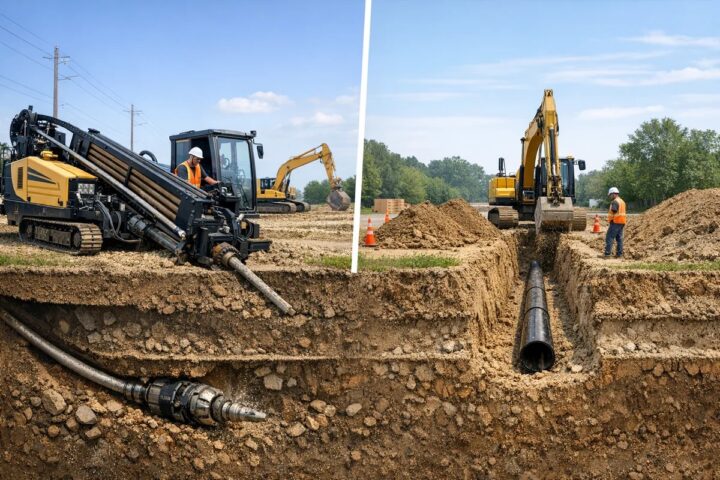
Directional drilling vs trenching: the quickest way to understand the difference
Trenching is an open-cut excavation method where crews dig a continuous trench, place the utility, then backfill and restore the surface. Directional drilling (often called trenchless boring or HDD) is a trenchless method that installs pipe or conduit through a drilled bore path with minimal surface disruption, typically using small entry and exit pits.
Both methods can install water, sewer, gas, electrical conduit, and fiber cable. The best choice is usually less about the utility itself and more about surface impacts (pavement, landscaping, driveways), soil and groundwater, and risk (existing utilities, access constraints, and restoration standards).
Below, you will see what actually happens on site, what drives HDD vs trenching cost, how schedules differ from planning through restoration, and a practical checklist you can use to decide which approach fits a real-world project.
Horizontal directional drilling vs trenching: what actually happens on site
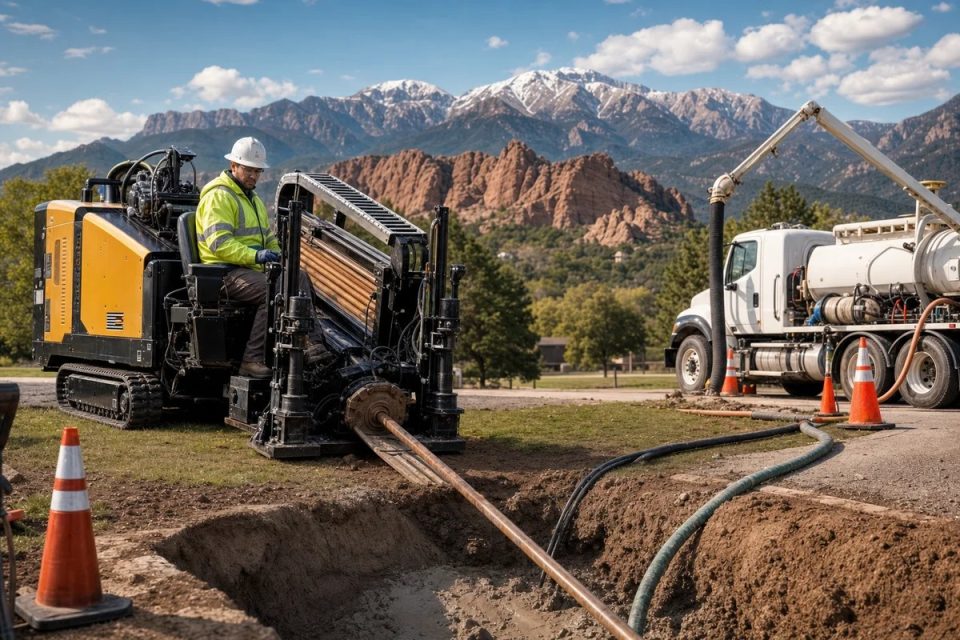
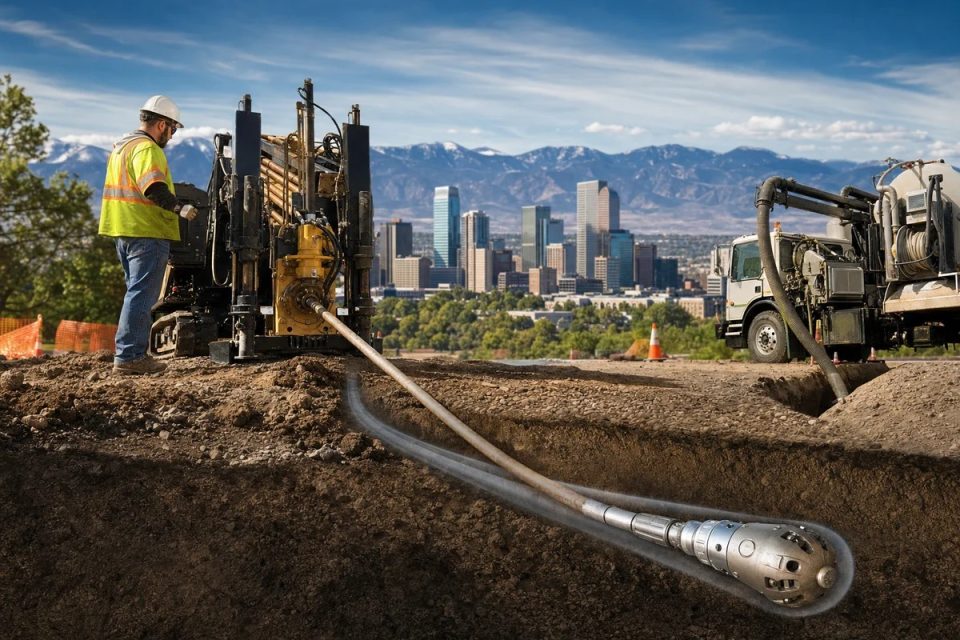
Trenching workflow: saw cut or strip surface, excavate, lay utility, bed and compact, backfill, then restore pavement or landscaping. HDD workflow: pothole/locate, drill pilot bore, ream to size, pull back product pipe, then test and tie-in with small entry and exit pits.
Trenchless vs open cut trenching: side-by-side comparison you can scan
If you are comparing trenchless vs open cut trenching, the biggest difference is where the disruption shows up. Open cut spreads impact across the entire alignment (excavation, spoils, lane closures). Trenchless concentrates disruption at the pits, which is why trenchless boring vs trenching can be a better fit under roads, driveways, waterways, and established landscaping.
Also, the cheapest installation method on paper is not always the lowest total project cost once you add restoration, traffic control, and downtime. Right-of-way rules, lane-closure limits, protected trees, waterways, and dense existing utilities often push projects toward trenchless, even when unit rates look higher.
| Factor | Trenching (open cut) | Directional drilling (trenchless) |
|---|---|---|
| Surface impact | High, continuous excavation | Low, entry and exit pits only |
| Typical best for | Short, shallow, easy-access runs | Crossings under roads, driveways, landscaping, water |
| Restoration | Often significant (pavement, landscaping) | Often limited restoration |
| Schedule sensitivity | Weather and restoration can extend timeline | Setup time up front, then fast through crossings |
| Key risks | Utility strikes during excavation | Frac-out (inadvertent drilling-fluid returns), steering challenges in certain soils |
HDD vs trenching cost: what you are really paying for
When people ask about HDD vs trenching, they usually want a simple cost-per-foot number. In practice, pricing is a bundle of line items that can move a lot depending on depth, diameter, soil, congestion, and especially restoration requirements.
Common trenching cost components often include:
- Mobilization (crew, trucking, safety setup)
- Saw cutting and demolition (asphalt, concrete, curb, sidewalk)
- Excavation and spoils hauling/disposal
- Bedding, pipe placement, compaction, backfill
- Traffic control and lane-closure compliance
- Surface restoration (paving, striping, landscaping)
- Testing and tie-ins (pressure tests, inspections)
Common directional drilling cost components (directional boring) often include:
- Utility locating and potholing to verify conflicts (often performed with hydro excavation and aligned with Common Ground Alliance best practices)
- Drill rig, tooling, and guidance (steering system, tracking)
- Pilot bore, reaming to final diameter, and pullback
- Drilling fluid (mixing, containment, cleanup)
- Entry/exit pit excavation and limited spoils handling
- Product pipe handling and staging space for pullback
- Testing and tie-ins at each end
Quotes may come as per linear foot, lump sum, or time and materials. To compare apples to apples, confirm that each bid is based on the same assumptions: depth, diameter, total length, number of crossings, and exactly what restoration standard is included (for example, full-lane mill and overlay versus a trench patch).
Realistic guidance is simple: costs vary heavily by region, permitting, soil and groundwater, utility congestion, and restoration scope. If a price looks too good, it is often because something big (like restoration, traffic control, or dewatering) is sitting in the exclusions.
Cost traps that swing the total on directional boring vs trenching
In directional boring vs trenching, trenching can look cheaper until you add pavement replacement, concrete removal, landscaping rebuild, extended lane closures, or lost business access. HDD costs can spike with cobbles or rock, longer bores, larger diameters, limited laydown space for pipe pullback, dewatering needs, or added drilling-fluid management requirements.
Boring vs trenching timeline: how long each method takes from planning to restoration
A good boring vs trenching schedule comparison includes more than the installation day. Most projects move through these phases: utility locating (often through 811, plus private locating when needed), potholing, engineering and bore-path design, permitting, mobilization, installation, tie-ins, inspection, and restoration.
Trenching often progresses steadily once excavation starts, but the overall timeline can stretch because restoration (paving, concrete, landscaping) and traffic control requirements take time and are weather-sensitive. Horizontal directional drilling may take longer up front for planning, setup, and verification potholes, but it can complete critical crossings quickly and reduce time spent restoring large surface areas.
Owners can influence schedule more than they think: submit complete plans to reduce permit revisions, invest in pre-locates and potholing to confirm depths, and consider off-peak work windows where agencies allow it.
Timeline risks to plan for on trenchless boring vs trenching
For trenchless boring vs trenching, common delays include permit revisions, weather impacts, unknown utilities, inspection availability, unexpected soil and groundwater conditions, and restoration subcontractor lead times. Planning for these early usually costs less than reacting mid-job.
When trenchless boring makes sense and when trenching is the smarter call
Directional drilling is often the best fit when surface disruption is expensive or unacceptable. Typical best cases include road and driveway crossings, mature landscaping you cannot disturb, sensitive surfaces (pavers, decorative concrete), waterways, rail corridors, and tight rights of way where open excavation would trigger major traffic control or restoration.
Trenching can be the smarter call for short, shallow runs in open rural areas, simple tie-ins, and places where restoration is straightforward and access is wide open. If you can dig, place pipe, and restore cheaply and safely, open cut can be the most direct path to a reliable installation.
Use this quick decision checklist before you commit to either approach in your directional drilling vs trenching comparison:
- List surface restoration costs you will actually be held to (pavement type, concrete, landscaping, striping, irrigation).
- Confirm utility congestion with locates and strategic potholing, especially at crossings and tie-in points.
- Check soil and groundwater conditions, including dewatering risk and whether steering will be challenging.
- Evaluate traffic and access impacts, including lane-closure limits, business access, and work-hour restrictions.
- Compare bids using the same assumptions (depth, diameter, length, restoration standard, testing, tie-ins).
Directional drilling vs trenching bids: what to ask before you choose a contractor
The fastest way to get accurate pricing is to provide the inputs contractors need: utility maps, 811 locates, as-builts, expected depth and diameter, restoration standards, and any work-hour or lane-closure restrictions. Then ask bid-comparison questions that reveal what is really included: What restoration is covered, who handles traffic control, how are drilling fluids and spoils managed, and how are unknown utilities handled (unit prices, allowances, or change-order rates)? It can also help to review customer reviews and confirm relevant experience with similar crossings, soils, and restoration standards.
If you want a site-specific recommendation based on surface constraints, bore length, and local permitting rules, UES Construction can help you compare options and reduce surprises. You can request a consult here: https://uesconstruction.com/contact-us/.
Directional drilling vs trenching FAQ
Is trenchless vs open cut trenching always cheaper overall?
Not always. Trenching can be cheaper for short, shallow installs in easy-access areas, but the total cost often rises when you add pavement replacement, landscaping rebuild, traffic control, and downtime. Trenchless work can win on total cost when restoration and disruption would be expensive.
What is the typical cost per foot for HDD vs trenching?
Cost per foot varies widely by region, depth, soil, diameter, utility congestion, and restoration standards. The most reliable approach is to price both methods using the same scope assumptions, then compare total installed cost including restoration, traffic control, and tie-ins.
When should I avoid horizontal directional drilling vs trenching?
Avoid HDD when the geology is unsuitable for steering, when there is not enough space for safe setup and pipe pullback, or where drilling fluid management is restricted. In some cases, a short open-cut trench or a different trenchless method may reduce risk and cost.
Next step: price both methods with the same scope
If you are deciding between directional drilling vs trenching, the most helpful move is to build one shared scope sheet, then ask contractors to price both methods against it. When depth, crossings, restoration standards, and traffic control assumptions match, the “best” option usually becomes obvious for your site and risk tolerance.