
Trenchless Directional Drilling in Colorado Springs
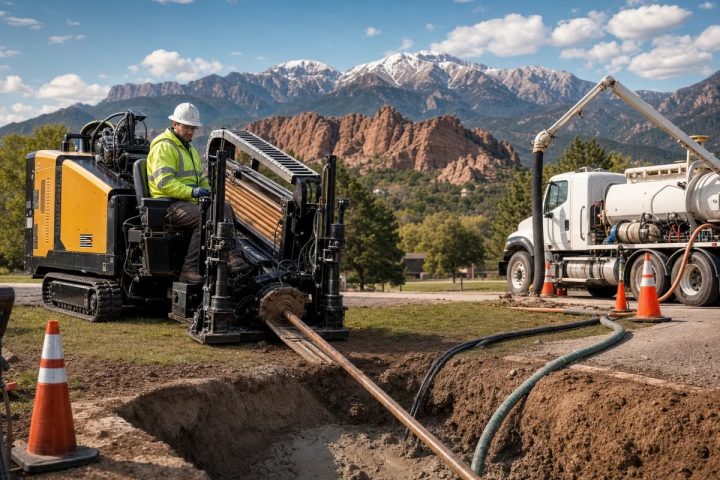
What trenchless directional drilling changes on a Colorado Springs jobsite
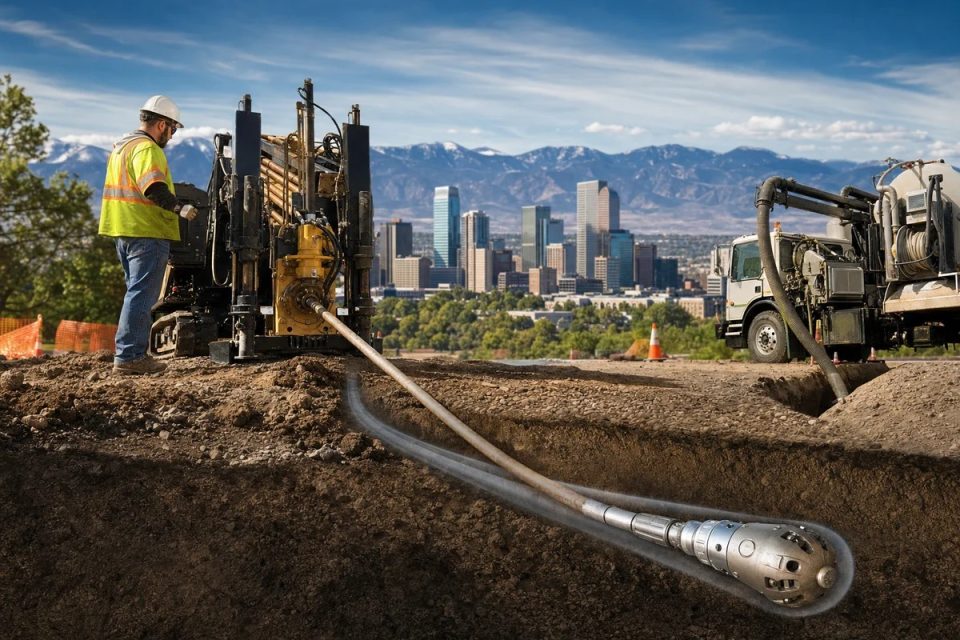
Trenchless directional drilling is a guided underground bore that installs conduit, pipe, or cable without cutting a long open trench. In plain terms, the line is steered below the surface, then the product is pulled through the path created for it.
That matters on Colorado Springs properties where finished landscaping, paved access, sidewalks, or active traffic areas would be hard to trench through. With trenchless directional drilling Colorado Springs projects, the main benefit is protecting the surface while keeping the work moving safely.
Used well, the method reduces disruption to daily use, shortens the amount of restoration, and helps keep the underground install aligned with the rest of the site plan. That is why many owners choose trenchless drilling Colorado Springs crews for work that needs to stay clean and controlled.
Where directional boring is the smarter fit
Directional boring Colorado Springs jobs make more sense when open trenching would cost more in restoration than the underground run itself. If pavement, landscaping, or access would need to be rebuilt afterward, boring is often the cleaner choice.
We see that decision come down to access, surface protection, and what is already buried in the corridor. A short run can still be the right candidate if it crosses a driveway, a parking lane, or a utility congestion point that would be difficult to expose.
That is also why directional drilling Colorado Springs projects are often used in yards, commercial drive lanes, sidewalks, parking lots, and utility crossings. Distance matters, but it is not the only factor. A 40-foot run under a finished surface may be a better boring job than a much longer trench across open ground.
Tight yards and finished landscaping
Trenchless boring Colorado Springs crews use it to avoid tearing up turf, planting beds, sprinkler lines, retaining walls, and other finished features. Repairing those items can take more time and money than the underground install itself.
Roads, driveways, and parking areas
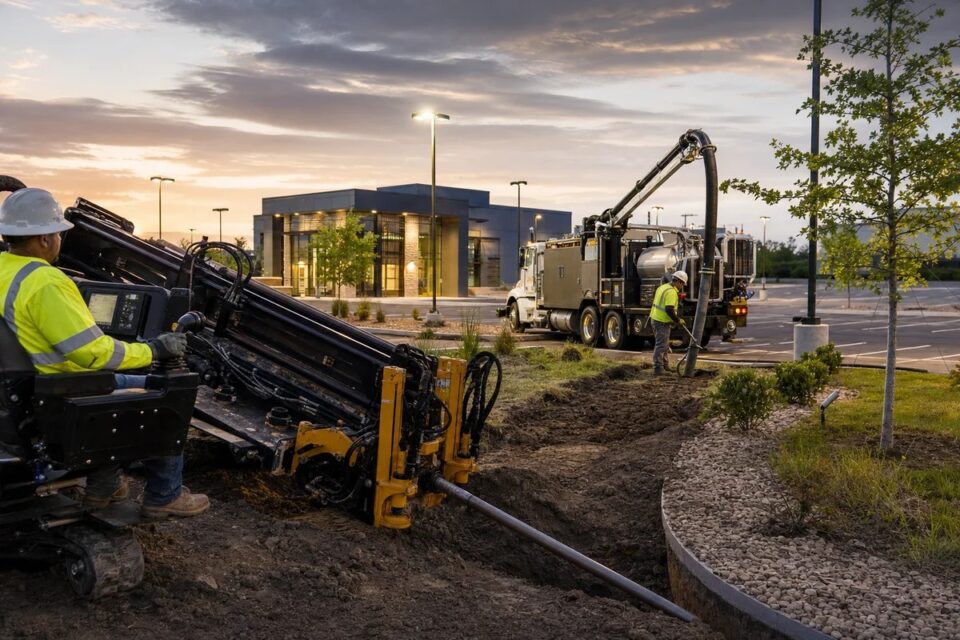
A trenchless route can pass under pavement instead of cutting a long trench through it. That helps maintain access, keeps traffic moving, and cuts down on the amount of patching and surface repair needed afterward.
Crossings near existing utilities
When underground corridors are crowded, boring is often the cleaner option because the line can be guided past existing utilities without opening the entire surface. Even then, utility locating, depth control, and careful route planning still matter at every step.
How a horizontal directional drilling project gets planned
A solid horizontal directional drilling Colorado Springs project starts long before the rig spools up. We map the route, confirm what is already underground, set the entry and exit points, then build a bore path that respects depth, clearance, and the final pullback.
That planning helps keep the job safer and easier to schedule. It also helps the project stay within scope, because the crew knows where the conflict points are before work begins.
- First, locate what is already underground. We identify buried utilities before drilling begins, not after the rig is on site. Locate marks, utility records, and, where needed, careful exposure methods help verify the route.
- Then set the entry and exit points. The rig needs workable access and enough room for a controlled bore path. We choose the route to avoid conflicts, protect nearby property, and keep the pullback realistic.
- Last, pull the line and confirm the install. The final product may be conduit, pipe, or cable, but the goal is the same, a clean pullback that is ready for the next trade. Inspection, testing, or another confirmation step follows so the line is ready to use.
What changes the schedule, access needs, and final price
Most trenchless boring Colorado Springs estimates are shaped by a few site conditions, not by a single rule. Bore length, depth, soil type, how many utilities the crew must work around, and how much restoration is needed all affect the equipment choice and the pace of the job.
Rock, tight access, multiple tie-ins, or surface repair can slow production and change the setup. That is why a solid estimate is scope-based, built from the actual site rather than a generic per-foot assumption.
Soil and ground conditions
Rocky or compacted ground can slow production and influence tooling. A pre-job look at the site helps prevent surprises once drilling starts.
Length and complexity of the run
Longer runs, deeper paths, and multiple bends add planning time. Crossings under paved areas or active drive lanes usually need extra coordination too.
Restoration and cleanup after the bore
Trenchless work reduces restoration, but some surface repair may still be needed. Seeding, patching, or paving tie-ins should be part of the project scope from the beginning.
Choosing a local crew for directional drilling in Colorado Springs
Local experience matters on Front Range jobs because access, weather, and utility corridors can change fast from one property to the next. UES Construction has been in business since 1992 and is locally owned, family operated, and fully licensed, bonded, and insured. It also offers free estimates and free consultation/inspection for this work.
When you compare directional drilling Colorado Springs proposals, look for clear scope, site protection steps, communication about conflicts, and a budget that holds together once the work starts.
Questions worth asking before work starts
- Who is handling utility locating and verification?
- What surfaces will be protected, and what restoration is included?
- How will the route be confirmed before the bore begins?
- What happens if a utility conflict or access limit changes the plan?
What a prepared crew brings to the site
A prepared crew shows up with maintained rigs, locating equipment, and a route plan that accounts for nearby surfaces and underground conflicts. That helps the work stay organized and reduces avoidable delays.
Colorado Springs directional drilling questions people ask before they book
Before a trenchless drilling plan moves ahead, we usually answer the same practical questions. Clear answers up front make it easier to decide whether the job needs directional drilling Colorado Springs service or a different approach.
When is directional boring a better choice than open trenching?
Directional boring is the better choice when the surface is expensive to replace or cannot be interrupted for long. If you need to protect pavement, landscaping, or traffic flow, boring is usually the cleaner option.
What can stop a trenchless drilling plan from moving ahead?
A utility conflict or a tight access area can stop the plan from moving ahead. If the marked corridor leaves no safe bore path, the crew may need to switch methods or adjust the route.
Why does utility locating matter so much on a directional drilling job?
Utility locating matters because it tells the crew where to steer and how deep to run. Marked utilities and verified records reduce the risk of damage and help control the bore path.
Can horizontal directional drilling handle both small residential runs and larger commercial work?
Yes, horizontal directional drilling Colorado Springs crews can handle both, as long as the equipment, access, and line length fit the job. A short residential conduit run and a longer commercial crossing use the same basic method, just with a different setup.
Get a site walk before the bore starts
If your project needs a trenchless solution, request a site walk or estimate before work starts so the route, restoration, and utility concerns are clear. You can reach UES Construction for a free estimate or a free consultation/inspection, and the team can help you decide whether directional boring is the right fit for the site.