
Trenchless Directional Drilling in Denver Explained
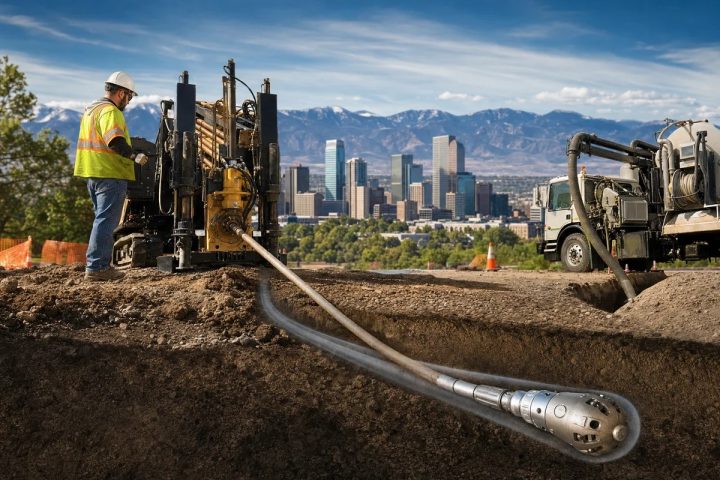
What trenchless directional drilling in Denver looks like on a real jobsite
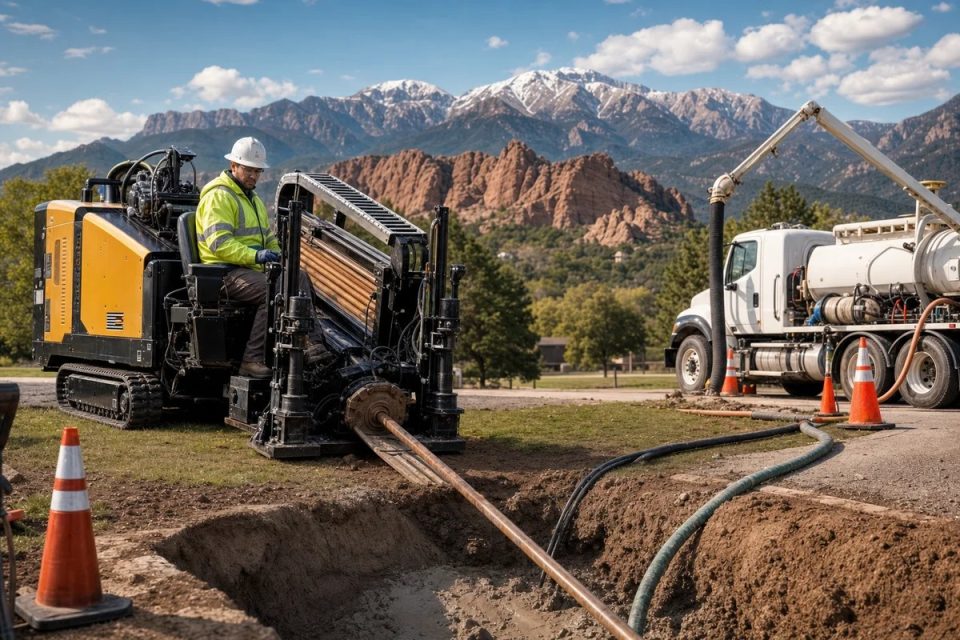
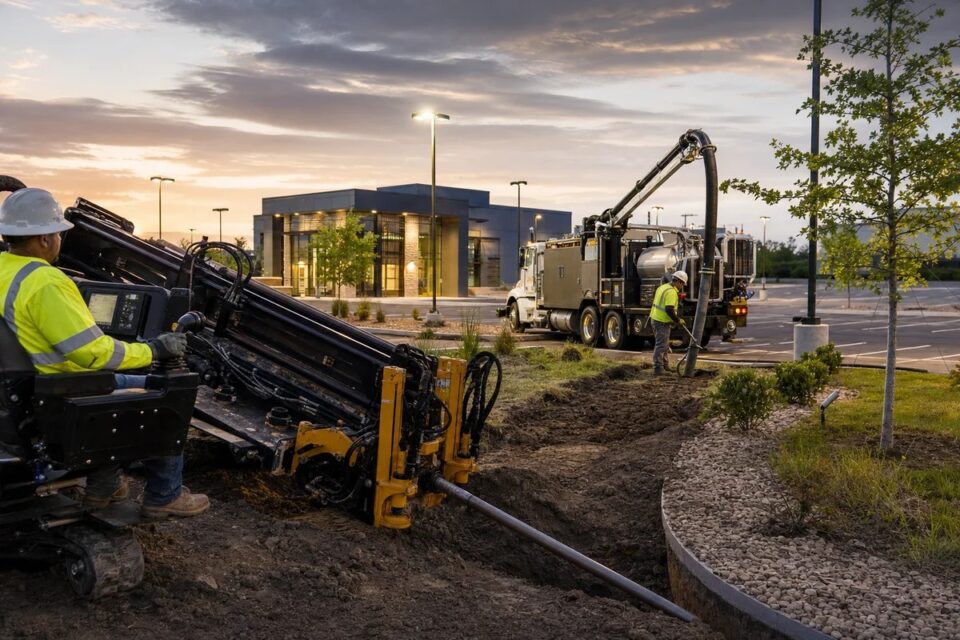
Trenchless directional drilling in Denver uses a guided bore to create an underground path from one small access pit to another instead of cutting a long open trench through the surface. On Colorado projects, we use directional drilling, directional boring, and horizontal directional drilling as overlapping terms because the method and equipment are closely related. The approach matters on narrow lots, finished pavement, mature landscaping, and job sites where underground utilities are already crowded close together.
What you see on site is usually a drill rig, a locating crew, and a route that has already been marked and checked. The goal is simple: get the line in place with less disruption at the surface and less risk around the work below grade.
Why Denver crews choose trenchless drilling over open trenching
Trenchless drilling services in Denver reduce saw-cutting, backfill, and full-depth restoration, especially on asphalt, concrete, and lawns. When a route has to cross a driveway, sidewalk, parking lot, private road, or a tight side yard, a bore usually avoids turning one crossing into a much larger repair job.
- Less concrete and asphalt removal on finished surfaces
- Less backfill work and less settlement risk after the cut is closed
- Less disruption to landscaping, trees, and irrigation lines
- Cleaner access for crossings under driveways, sidewalks, and parking lot aisles
That also helps crews work around existing underground utilities, but only when the locate picture is accurate and the route is planned carefully. If the line is dense or the marks are unclear, the right move is to slow down and confirm the path before the bore starts.
Projects that are a good fit for directional boring in Denver
Directional boring in Denver is a strong fit for electrical conduit, communications conduit, fiber and cable placement, water or service line crossings, and other utility runs that need to stay below grade. For HDD drilling in Denver, the best jobs are often the ones where open trenching would create more disruption than the installation itself.
- Residential lots where lawns, driveways, and walkways need to stay intact
- Commercial parking lots where surface restoration would be expensive and time-consuming
- Street, alley, and curb tie-ins that would otherwise require a long trench or lane closure
- Utility extensions that have to pass under hardscape without disturbing the finished surface
There are limits. Heavily obstructed routes, very short exposed runs, and hard rock conditions can point to a different method. In those cases, an open trench, a modified access plan, or another installation approach may be the cleaner decision.
How a bore moves from locate marks to pullback
Good planning matters in Denver because traffic control needs, city right-of-way coordination, and limited staging space can slow a job faster than the drill itself. A clean path from locate marks to pullback usually follows a simple sequence: locate the utilities, confirm the route, cut small entry and exit pits, steer the pilot bore, ream if needed, and pull the product into place.
- Utility locating and route checks
- Pilot bore and steering
- Reaming and product pullback
- Cleanup and surface restoration
1. Utility locating and route checks
We start with the exact route, the visible utility markings, and any conflict points that need verification before drilling begins. Where a crossing sits close to gas, electric, water, or telecom lines, potholing or hydro excavation confirms depth and lowers the chance of striking something hidden. Learn more about hydro excavation if you want a closer look at that step.
2. Pilot bore and steering
The drill head follows the planned line and gets corrected as soil conditions change or minor obstructions show up. The entry and exit pits stay relatively small compared with open trenching, which keeps the surface footprint contained while the bore head stays on the intended path.
3. Reaming and product pullback
If the bore diameter needs to increase, we ream before pulling the pipe, conduit, or cable bundle into place. A controlled pullback protects the product and keeps the underground directional drilling line aligned for utility, fiber, or conduit installs across Denver. Related services like cable placement services and fiber splicing can also come into play on communications work.
4. Cleanup and surface restoration
After pullback, pits are closed, disturbed areas are restored, and the finished work is checked against the plan. On pavement and landscaped sites, cleanup is part of the job, not an afterthought, because the handoff should look intentional and ready to use.
The final check looks at depth, alignment, protection of nearby utilities, and how much surface restoration is needed before the site is turned back over.
What to look for in a directional boring contractor in Denver
A directional boring contractor in Denver should be licensed and insured, and comfortable working around Colorado utility and underground conditions. UES Construction has been local and family-owned since 1992, and our team keeps modern equipment ready for tight residential access as well as larger commercial runs. Learn more about UES Construction or browse reviews from customers who have worked with us.
- How locates and potholing are handled before the drill truck arrives
- Whether permits, utility coordination, and access limits are part of the early plan
- How scheduling, restoration scope, and budget communication are managed before work starts
That kind of clarity matters because a long-standing local team is more likely to anticipate site constraints early and keep the project moving safely and on budget. We also offer free estimates and a free consultation or inspection, so you can compare scope before the first bore.
Questions people ask before trenchless directional drilling in Denver
The questions below cover fit, access limits, utility conflicts, and what should be ready before the crew arrives. If you are comparing trenchless directional drilling in Denver with an open cut, these are the details that usually decide the job.
When is trenchless directional drilling in Denver better than open trenching?
It is better when the surface is finished and hard to restore, such as asphalt, concrete, mature landscaping, or a utility-dense corridor. A driveway crossing or parking lot aisle is a common example where trenchless work usually saves time and surface repair.
Can horizontal directional drilling in Denver go under a driveway or parking lot?
Yes, it can, as long as the bore has enough depth and the locate picture is clear. A driveway, lot aisle, or private road crossing is one of the most common uses, but buried conflicts can force a route change.
What can change the route of underground directional drilling in Denver?
Unexpected utilities, rock, limited entry space, or permit constraints can shift the line. The crew may move an access pit, adjust depth, or change the bore angle to keep the installation safe.
What should I have ready before HDD drilling in Denver starts?
Have the route approved, utility marks visible, access clear, and one project contact on site. Moving vehicles out of the work zone and protecting finished surfaces can save setup time, and UES Construction can review the plan with you during a free consultation.
Plan the bore before the drill truck arrives
If you need trenchless directional drilling in Denver, our team at UES Construction can review the route, talk through access, and provide a free estimate or free consultation before work begins. Start with our contact page.