
Directional Drilling Site Lighting Broomfield Project
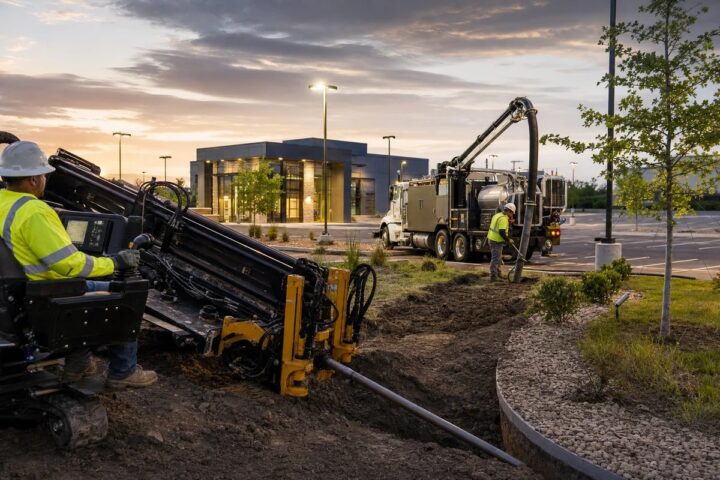
Why this Broomfield site lighting project called for directional drilling
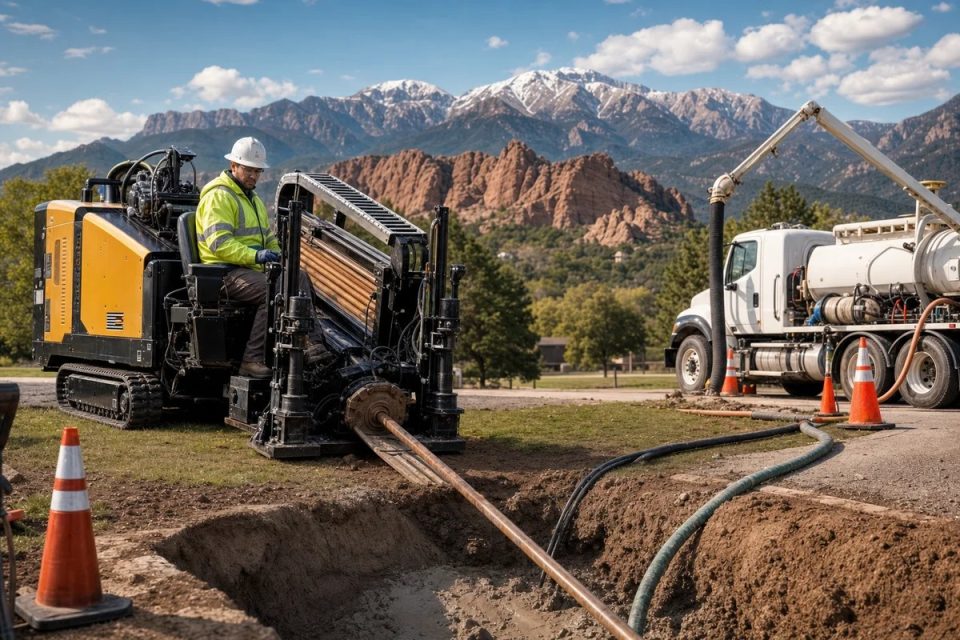
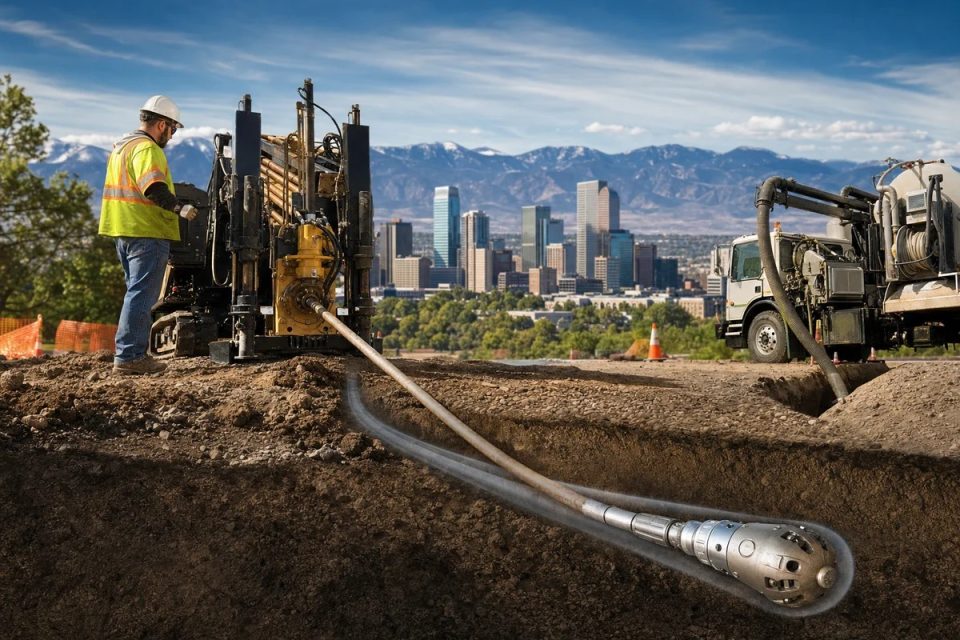
Directional drilling is a trenchless method that guides conduit underground between small access points. Instead of opening a long trench, we steer a bore path below the surface so the line can be installed with less disruption.
That fit this Broomfield site lighting project because the work needed to protect finished pavement and landscaping, limit disruption to the site, and keep the lighting sequence moving on schedule. Commercial site lighting is often a strong use case for Broomfield directional drilling jobs, since the run is usually long, straight, and easier to place without open cutting.
How directional boring for site lighting kept the surface intact
The three biggest surface-saving wins were no long sawcut, a smaller restoration area, and less interruption to traffic or parking. Compared with open trenching, directional boring for site lighting let us work under the surface while the property stayed usable above grade.
The tradeoff is simple, though: planning matters more than speed. Directional boring depends on accurate utility locating and a clean bore path, so we treated the layout as the critical step before the drill head ever moved.
This method helps most when the route crosses asphalt, concrete walkways, landscaped medians, or active drive lanes. Those are the places where a trench can create extra patching, extra downtime, and extra coordination with the site team.
The 4-step plan we used before the bore started
For commercial directional drilling work in Broomfield, our team followed four clear steps before the bore started. The route, the depth, the entry and exit points, and the turning radius all had to line up before we committed to the run. For the full horizontal directional drilling process, this is the same basic logic crews use on a standard bore.
-
Step 1: We verified the utility locate and lighting layout
We checked gas, electric, telecom, water, and any existing lighting lines before drilling. If the locate marks did not match the site plans, that was a stop point, not a guess-and-go situation, because one missed line can force a route change or delay the start.
-
Step 2: We set the entry and exit points for the conduit run
We chose the starting and ending pits based on setback from curbs, room for equipment, and the needed cover depth. A shorter bore can be tempting, but a safer turning radius matters more when the route crosses a tight area, and we protected the finished grade around the access points so restoration stayed limited.
-
Step 3: We drilled, tracked, and pulled the conduit
We tracked the bore head underground and kept it on line while the crew watched grade and alignment. Pullback tension was controlled, reaming was used only when needed to reduce stress on the run, and the pull passed when the conduit came back straight, intact, and ready for the next phase of the lighting work.
-
Step 4: We checked the run before the lighting crew moved in
We finished with continuity checks, pull quality checks, clear access points, and cleanup around the pits. That was the point where any issue got fixed before the next crew took over, because a clean handoff saves rework and keeps the project sequence tight.
How we helped on the Broomfield commercial site lighting project
At UES Construction, we coordinated with the site team on the lighting scope and kept our drilling sequence aligned with the project schedule. We mapped the underground route, reviewed the utility marks, and adjusted our line to stay clear of conflicts.
That let us complete the directional drilling with minimal surface disturbance, which helped the lot stay usable while the lighting work moved forward. We left the underground conduit for site lighting ready for the next phase, and we appreciated the chance to support the project in Broomfield.
What can slow down underground conduit for site lighting
The biggest delay driver is an unexpected utility, followed by rock or cobble in the path, then limited access or weather conditions. We stop and re-evaluate instead of forcing the bore when a locate discrepancy shows up or when repeated steering corrections tell us the route is not behaving the way the plans predicted.
A clear sign the plan needs to change is an unexpected conflict near the planned bore line. In that case, the safest move is to adjust the route, confirm the markings again, and protect the rest of the project from avoidable rework.
When to choose site lighting directional drilling over open trenching
Choose trenchless drilling when restoring asphalt, concrete, or landscaped areas would cost more time and disruption than the bore itself. That is the clearest rule for site lighting projects in Broomfield, especially when surface repair matters as much as installing the conduit.
Open trenching can still make sense for very short exposed runs or shallow tie-ins near equipment pads. If you are comparing methods, walk the site first so the route, surface conditions, and utility exposure are reviewed together, and if you want a second set of eyes, UES Construction can help with that site review.
Directional drilling site lighting Broomfield FAQs
These are the boundary questions we hear most often when a lighting run needs to stay clean above grade and predictable below grade.
When does directional boring beat trenching on a site lighting run?
It wins when the route crosses finished pavement, curbs, landscaped beds, or active drive lanes. If the run is short, open, and the restoration is minor, trenching can be the simpler choice.
What would push a commercial directional drilling job into a second day?
An unmarked utility conflict, rock or cobble, or a late scope change can extend the work. The most common trigger is a locate issue that forces a stop and recheck before pullback continues.
How deep is underground conduit usually placed for lighting?
For many low-voltage site-lighting runs, a common range is about 18 to 36 inches, but the final depth follows code, voltage, and traffic conditions. Higher-traffic areas or longer exposure risks usually push the run deeper.
Can site lighting directional drilling reduce surface repair?
Yes, because the method typically uses only small entry and exit pits instead of a long open cut. Restoration is usually limited to those access points, so asphalt and concrete repairs stay smaller, even though the pits still need cleanup or patching.
Ready to map the lighting route?
If you are planning directional drilling site lighting Broomfield work or another commercial underground conduit project, we can help you compare the route before the bore starts. We are licensed and insured, and we offer free estimates and a free consultation/inspection, so you can review the scope with confidence. Contact UES Construction to get started.