How Does Directional Drilling Work Underground?
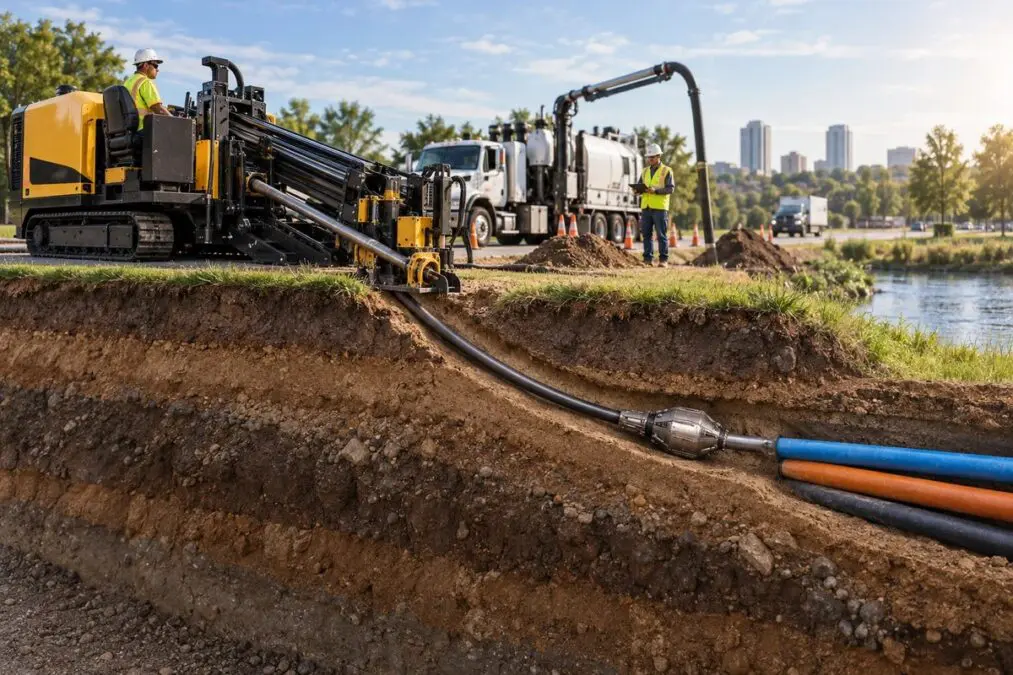
A cleaner way to cross driveways, roads, and landscaping
Directional drilling is a guided underground boring method used to install conduit, pipe, or cable without trenching the whole route. If you need a utility line under a driveway, roadway, patio, or landscaped area, that usually means fewer surface cuts and less disruption to pavement and plantings. The directional drilling process has three core parts: planning the path, drilling the pilot bore, and pulling the utility line back through.
That simple framework is why people ask how directional drilling works in the first place. The answer is controlled underground steering, not open excavation from end to end.
What directional drilling is actually doing below ground
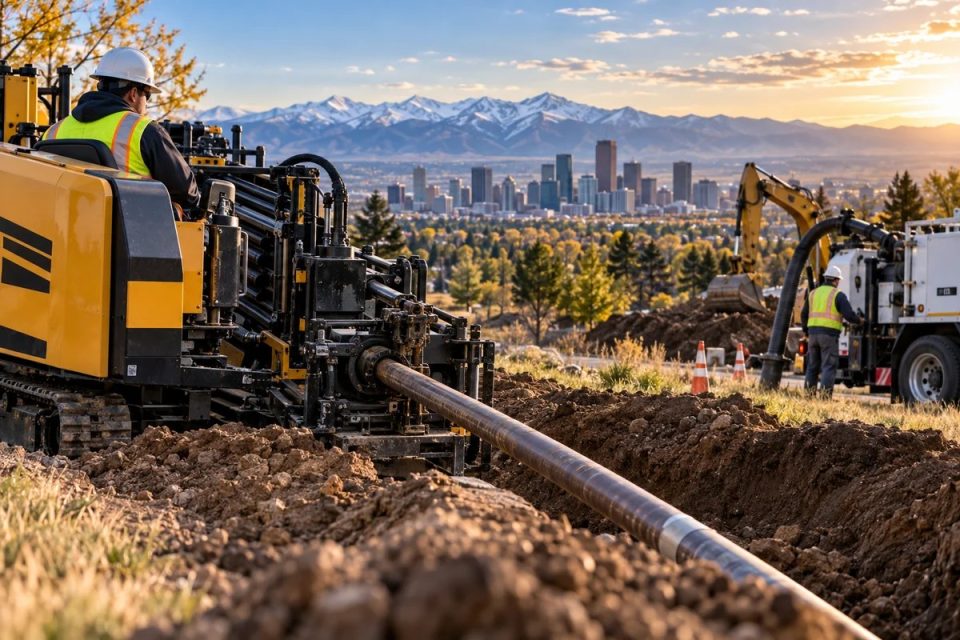
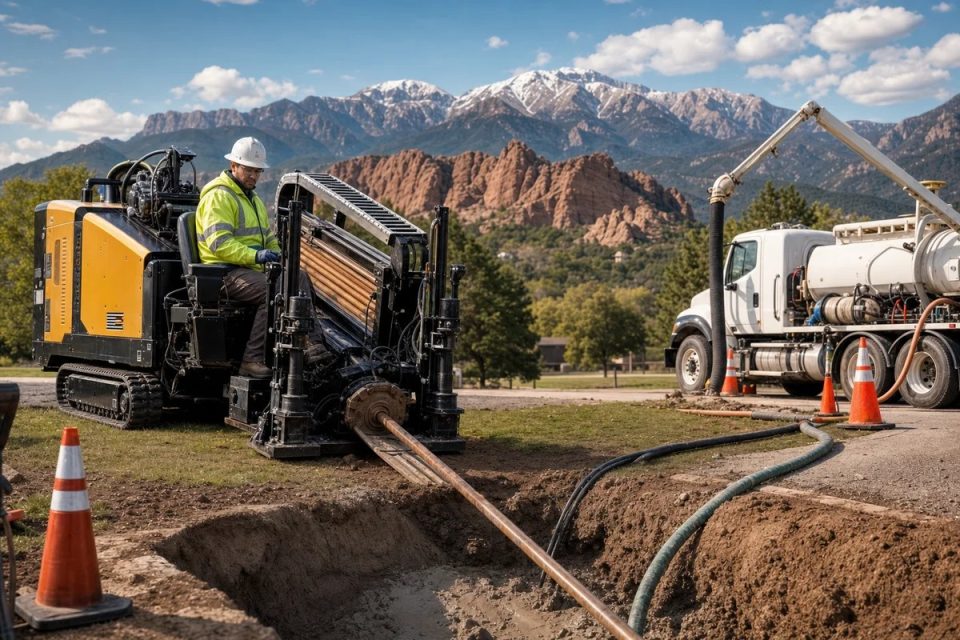
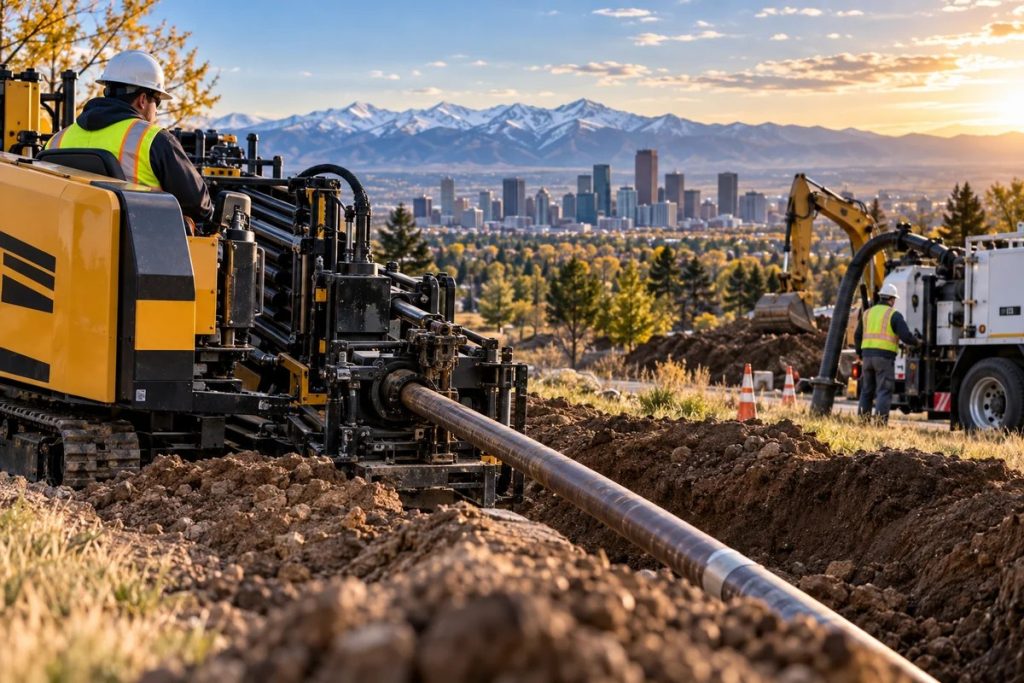
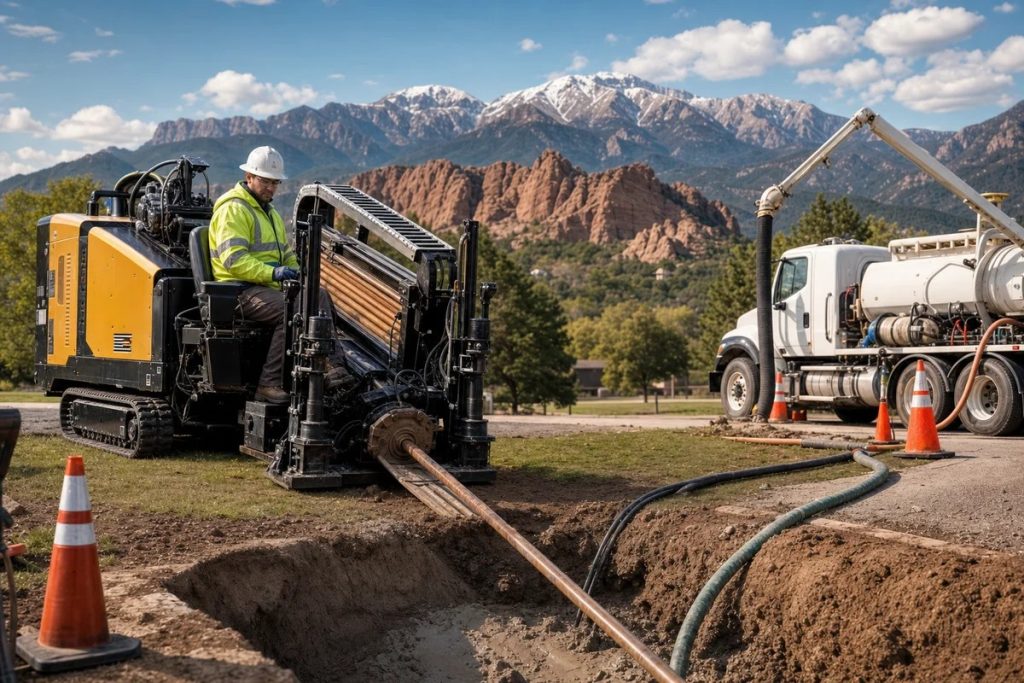
When we explain how directional drilling works, the key detail is that the drill head is steerable. The crew can change direction underground, which lets us follow a planned route instead of cutting a straight trench across the site. Before the rig starts, we map a bore path around existing utilities, finished surfaces, trees, retaining walls, and other obstacles so the line can get in cleanly without unnecessary surface damage.
This is also where horizontal directional drilling earns its reputation. It gives us control over depth and direction, which is useful when the line has to pass under a road, parking lot, sidewalk, or other finished area. We most often use it for electrical conduit, fiber, communications lines, and other underground service runs where keeping the surface intact matters. If you want a broader comparison, see our page on directional drilling vs trenching.
The directional drilling process step by step
Most jobs follow the same order, even when the site is complicated. We locate what is already underground, set the entry and exit points, drill the pilot bore, enlarge the hole, and then install the line. Good planning before the rig starts is what keeps the bore on grade and reduces the chance of surface damage.
- Mark utilities and set entry and exit points.
- Drill the pilot bore and guide the bit.
- Ream the path and pull the line into place.
Those three stages sound simple, but the details matter. Each correction underground affects the next move, so the crew has to stay consistent with depth, direction, and fluid management from start to finish.
Step 1 map the route and locate existing utilities
We call for utility locating and verify what is already underground before drilling begins. The crew also confirms entry and exit points, bore depth, and the space needed for staging equipment. Soil conditions and nearby hardscape can change the planned route before the first hole is drilled, especially when the job has tight access or active traffic nearby.
Step 2 drill the pilot bore and guide the bit
The pilot bore is the first narrow pass that creates the underground path. A locator and the drill operator work together to keep the bit on the planned line and avoid existing utilities. Small steering corrections are how the crew follows depth and direction without opening a trench.
Step 3 ream the path and pull the line into place
After the pilot bore is complete, we usually enlarge the hole before the conduit, pipe, or cable is pulled through. Drilling fluid helps clean the bore and support the hole while the product is installed. Final cleanup and surface restoration depend on the jobsite and how much access was needed, which may mean patching pavement, regrading soil, or resetting landscape features.
Why utility installers choose horizontal directional drilling over open trenching
The biggest advantage is simple: less disturbance to the surface. Horizontal directional drilling can cross pavement, sidewalks, lawns, and driveways with far less cutting than open trenching, which means less restoration work and fewer interruptions for the property owner or traffic pattern. That matters on busy roads, finished commercial sites, and areas with existing underground infrastructure where a trench would create more damage than the utility line itself.
That is why directional boring for utility installation is often the better fit when the goal is to protect the surface while still placing a clean, reliable line underground. At UES Construction, we often recommend it for crossings under active parking lots, private roads, and finished landscaping because it keeps the surface work focused and predictable. For a look at one of the company’s finished-project examples, see directional drilling finished driveway Aurora.
What affects the route, the timeline, and the finished utility line
Three site factors shape the job more than anything else: soil type, rock, and buried utilities. Turning requirements matter too, because a long straight bore is easier to control than one that has to shift around obstacles. Careful locating, modern equipment, and experienced operators reduce surprises during the drill and pullback, which is especially important on Colorado jobs where hard soil, rock, and tight jobsite access can change the approach quickly.
We also look at the contractor side of the equation. A licensed and insured crew with well-maintained equipment is better positioned to protect the site and keep the work moving. UES Construction offers free estimates and free consultations or inspections so you can compare scope before the job starts.
Questions people ask before a drill rig shows up
You can usually tell whether directional drilling fits by looking at access, surface type, and what is already buried on the site. These questions help narrow down the boundary cases so you can choose the right method before the rig arrives.
What kinds of utilities can be installed with directional drilling?
We can install electrical conduit, fiber, communications cable, and many low-voltage utility runs. It is a strong fit when the line needs to cross pavement, a driveway, or landscaped ground without a trench.
How do crews avoid hitting gas, water, or communication lines?
We avoid those lines by locating them first, following the marked utilities, and steering the drill head in small corrections during the pilot bore. If a conflict shows up, we adjust the bore path before pullback instead of forcing the line through.
When is open trenching still the better choice?
Open trenching is the better choice for shallow, straight runs with wide access and no surface obstacles. If there is no pavement to protect and the route is simple, trenching can be the faster option.
What has to happen after the bore is finished?
We usually complete cleanup, verify the installed line, and restore the disturbed area. That can mean patching pavement, regrading soil, or resetting landscape features before the crew leaves the site.
Planning a Colorado utility crossing
If you need directional drilling, underground utility work, or a cleaner utility crossing on a Colorado jobsite, reach out through our contact page. We handle projects across Aurora, Denver, Colorado Springs, Littleton, Lakewood, Thornton, Castle Rock, Parker, and nearby areas, and we can help you sort out the right approach before work begins.